+86 180 1863 2298 service@pulomax.com



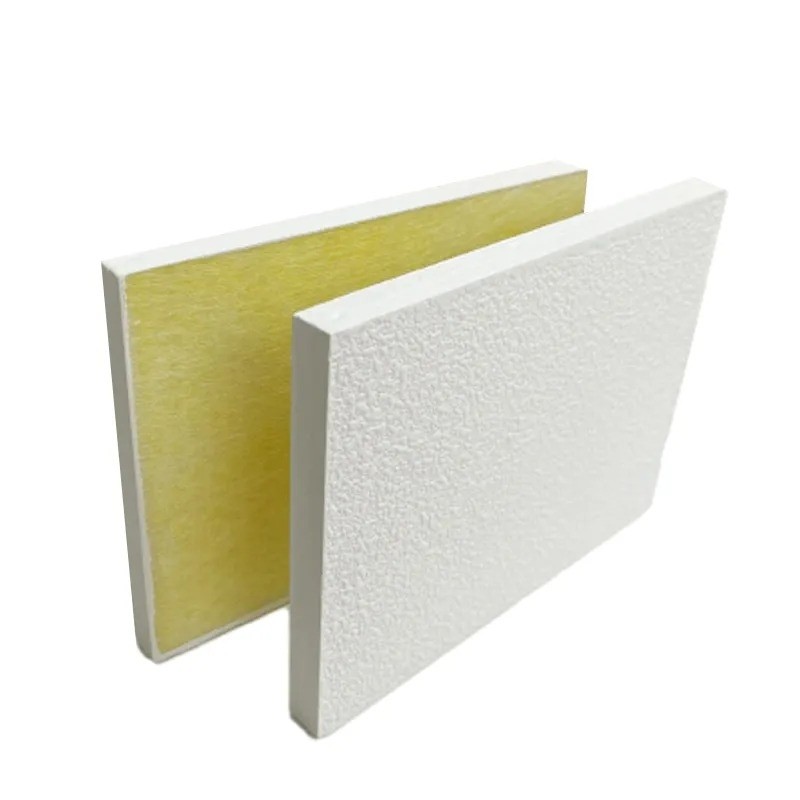


Material: Dry-felted fiberglass with scrim
Thickness: 15 / 20 / 25 mm
Size: 595×595, 600×600, 603×603, 595×1195, 600×1200, 603×1210 mm
Density: 80–150 kg/m³
Edge: Square (lay-in) / Tegular / Concealed
Fire Rating: Class A (ASTM E84), A2-s1,d0 (EN 13501-1)
NRC: 0.55–0.90
Color: White, Black, Custom RAL on request
Application: Offices, schools, healthcare, retail
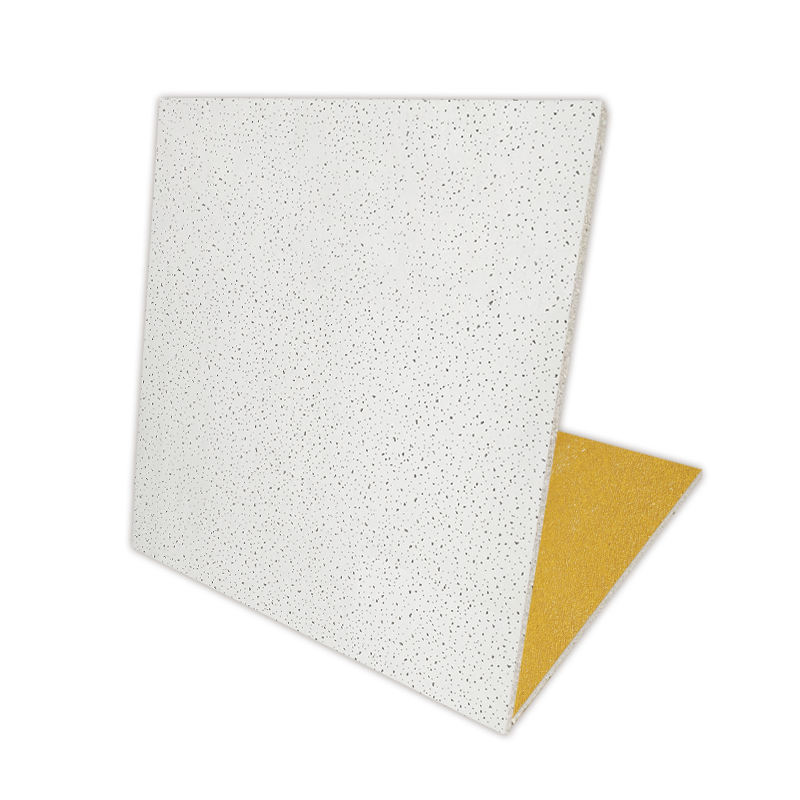
PuloMax Fireglass fiberglass ceiling boards are lightweight acoustic panels built for commercial interiors that need high sound absorption, low weight, and a clean, modern look. They drop into standard T-bar grids, meet Class A fire performance under ASTM E84 and EN 13501-1, and are available in 15 / 20 / 25 mm thickness with square, tegular or concealed edges. This page covers the product, the specifications, where it works best, and how to request a quote.
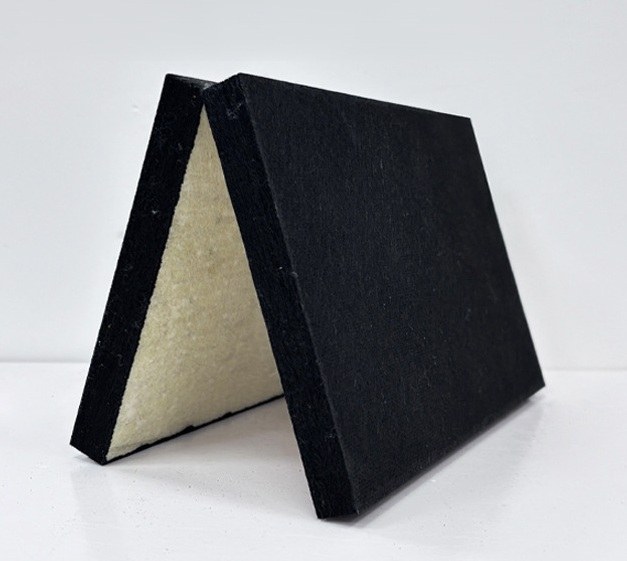
A fiberglass ceiling board is a lightweight acoustic panel made from fine glass fibers bonded into a dense, uniform mat. The open, fibrous structure traps sound energy and converts it into a tiny amount of heat, so a typical 20 mm board with the right surface finish reaches a Noise Reduction Coefficient (NRC) of 0.55–0.85, with high-density options at 0.90. The same panel weighs roughly a quarter of a comparable mineral fiber board, which means easier handling on site and lower dead load on the suspension grid — a real advantage on retrofit projects where the original ceiling grid is being reused.
PuloMax Fireglass panels are dry-felted fiberglass boards with a factory-applied scrim and paint finish, designed for lay-in, tegular and concealed-edge ceiling grids in commercial interiors.
Buyers weighing fiberglass against mineral fiber usually look at four things:
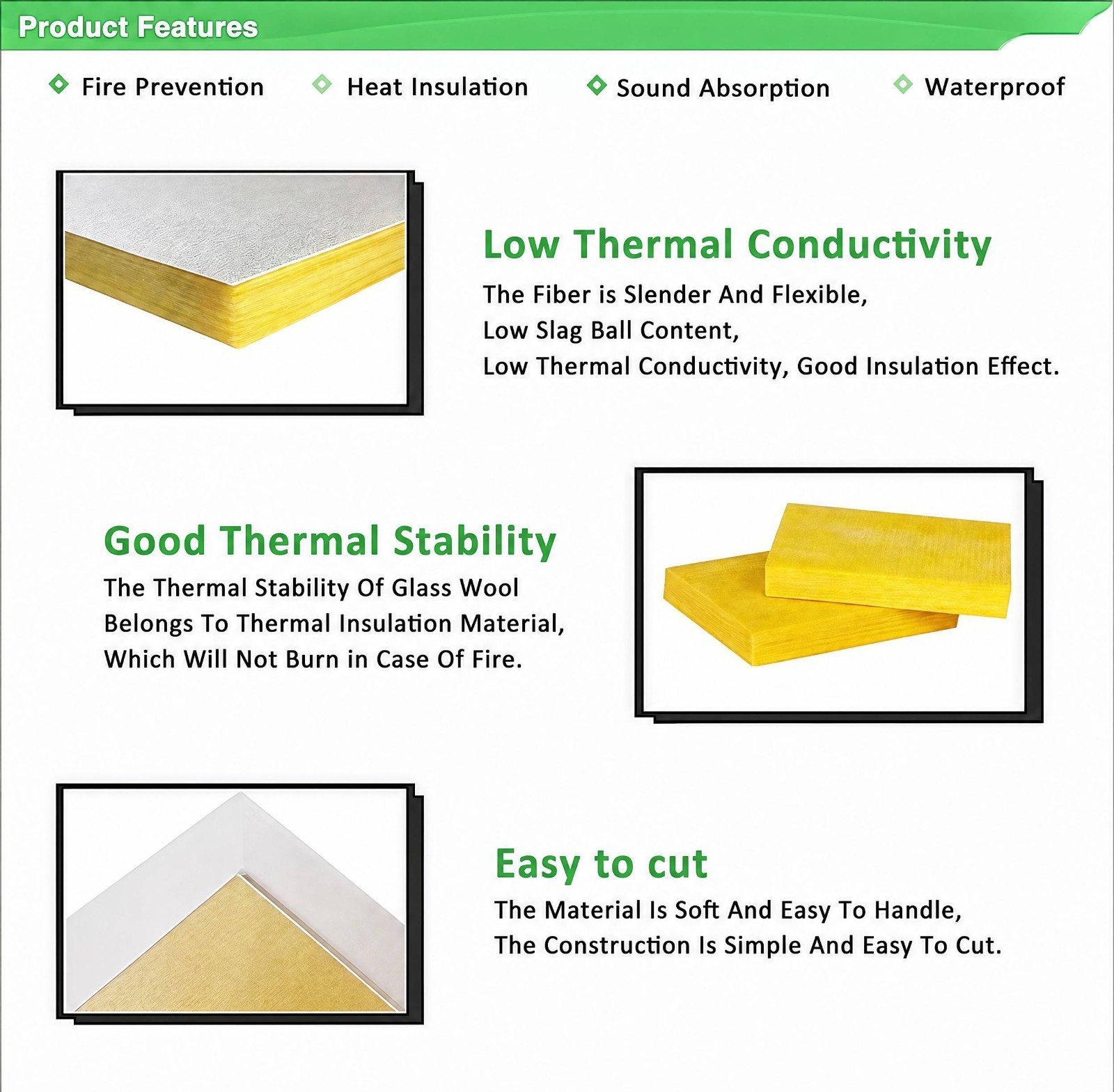
NRC per millimeter. Fiberglass panels reach higher NRC at lower thickness because the fiber matrix is more open. A 15 mm fiberglass board can match the absorption of a 16–19 mm mineral fiber board.
Weight. A 600×600 mm fiberglass board weighs around 1.2–2.0 kg depending on thickness and density, versus 3.5–5 kg for a mineral fiber board of the same size. Lighter panels cut transport cost and simplify ceiling grid design.
Moisture behavior. Fiberglass is dimensionally stable up to RH 95 % and does not sag under the loads specified in ASTM C635 / EN 13964 for lay-in ceilings. Mineral fiber sags more visibly at the same humidity.
Surface finish. A factory-painted scrim keeps the visual consistent across batches and gives a clean, modern look that matches most open-plan office specifications.
| Item | Value |
|---|---|
| Product type | Fiberglass acoustic ceiling board |
| Material | Dry-felted fiberglass with factory-applied scrim |
| Density | 80–150 kg/m³ |
| Thickness | 15 mm, 20 mm, 25 mm |
| Standard sizes | 595×595 mm, 600×600 mm, 603×603 mm, 595×1195 mm, 600×1200 mm, 603×1210 mm |
| Color | White (standard); custom RAL colors on request |
| Mass humidity rate | ≤ 0.8 % |
| Edge detail | Square (lay-in), Tegular, Concealed |
| Surface finish | Factory-applied paint on durable scrim |
| Fire performance | Class A (ASTM E84); Class A2-s1, d0 (EN 13501-1) — project-specific reports available on request |
| NRC | Up to 0.85 (standard scrim) / up to 0.90 (high-density) — test data on request |
| Application | Indoor lay-in / tegular / concealed grid ceiling systems |
| Recommended grid | T-bar 15 mm / 24 mm exposed tee, or concealed-compatible carrier |
All figures are typical values. Project-specific test certificates (ASTM E84, EN 13501-1, NRC) are issued per batch on request.
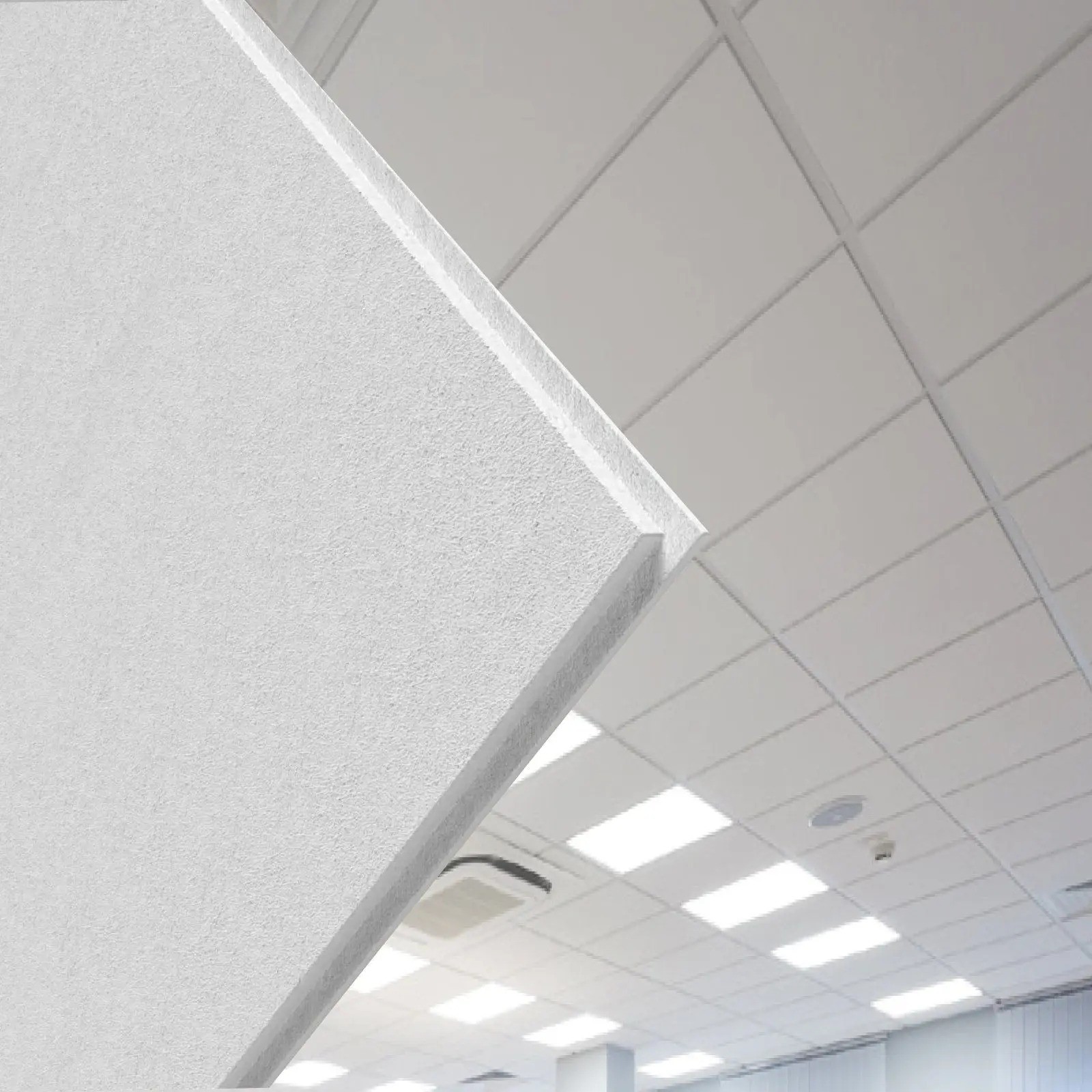
PuloMax Fireglass panels are available in three edge details to match the visual on site:
| Edge detail | Look on site | Typical module | Comment |
|---|---|---|---|
| Square (lay-in) | Panel sits flush on the T-bar; the grid is visible | 595×595, 600×600, 603×603 mm | The default for open-plan offices and corridors |
| Tegular | Panel edge drops below the grid, creating a clean reveal shadow | 600×600, 595×595 mm | Pairs well with 24 mm exposed T-bar |
| Concealed | Grid is fully hidden; only a thin joint shows | 600×600, 600×1200 mm | For monolithic or feature-ceiling layouts |
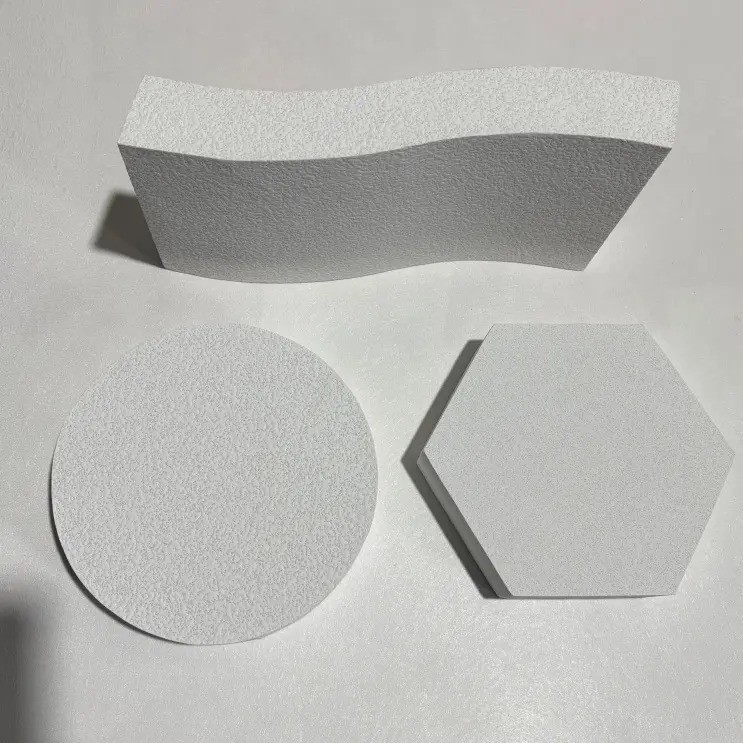
Custom rectangles (e.g. 300×1200 mm, 300×1800 mm) and acoustic perforations are available at longer lead time. Ask your sales contact for the current production calendar.
PuloMax Fireglass is specified most often in spaces that need quiet and a clean look at the same time:
Open-plan offices and meeting rooms. Drops reverberation in large open spaces without darkening the room the way some acoustic baffles do.
Schools and lecture halls. Meets classroom and auditorium speech-intelligibility targets when the right NRC and thickness are specified.
Healthcare. Cleanable scrim surface, low dust shedding, and stable performance under controlled humidity.
Retail and hospitality. Neutral white finish matches most interior palettes; custom RAL colors are available on request.
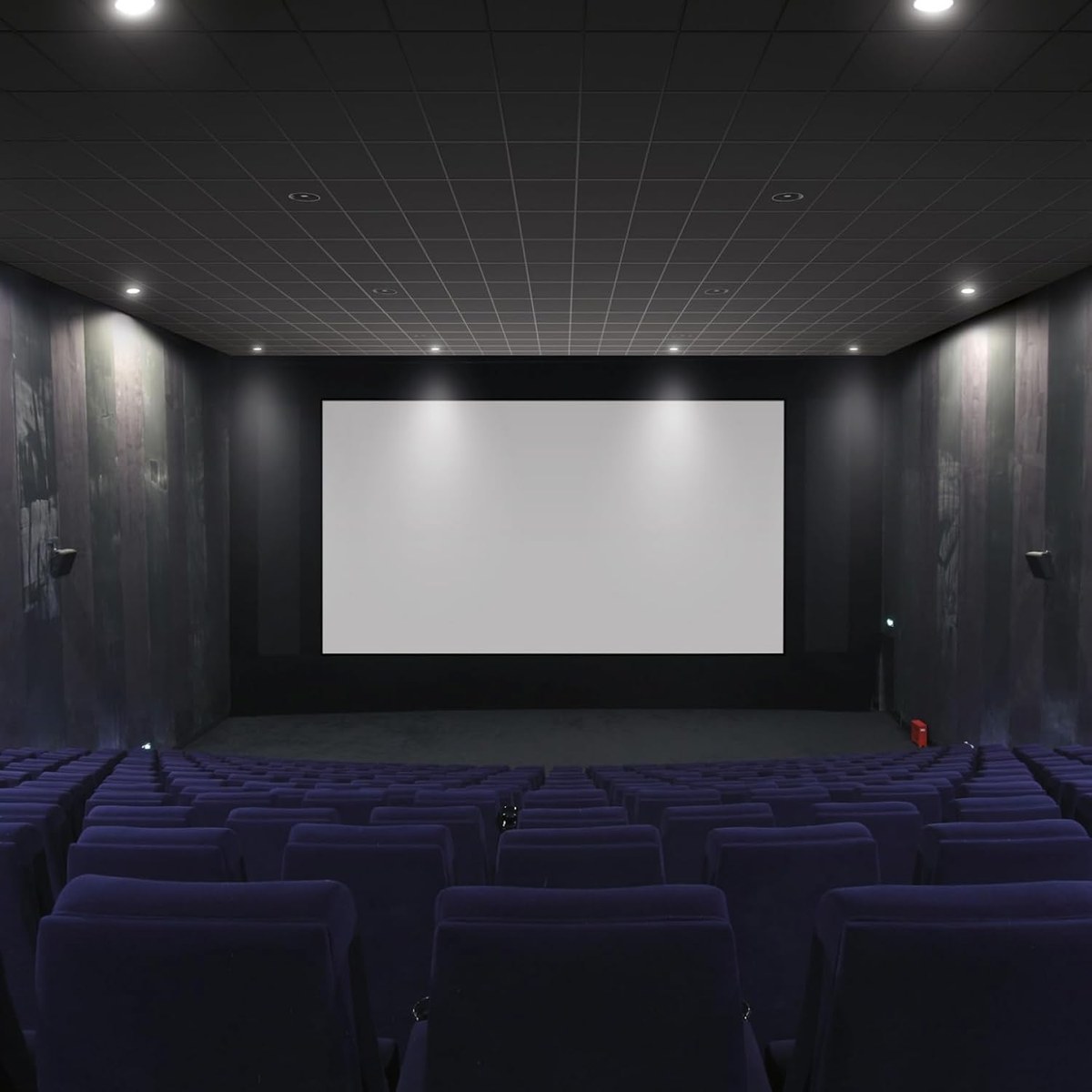
Home theaters and media rooms. High-density 25 mm boards reach NRC ~0.90, which is the level most home-theater designers target for clean dialogue.
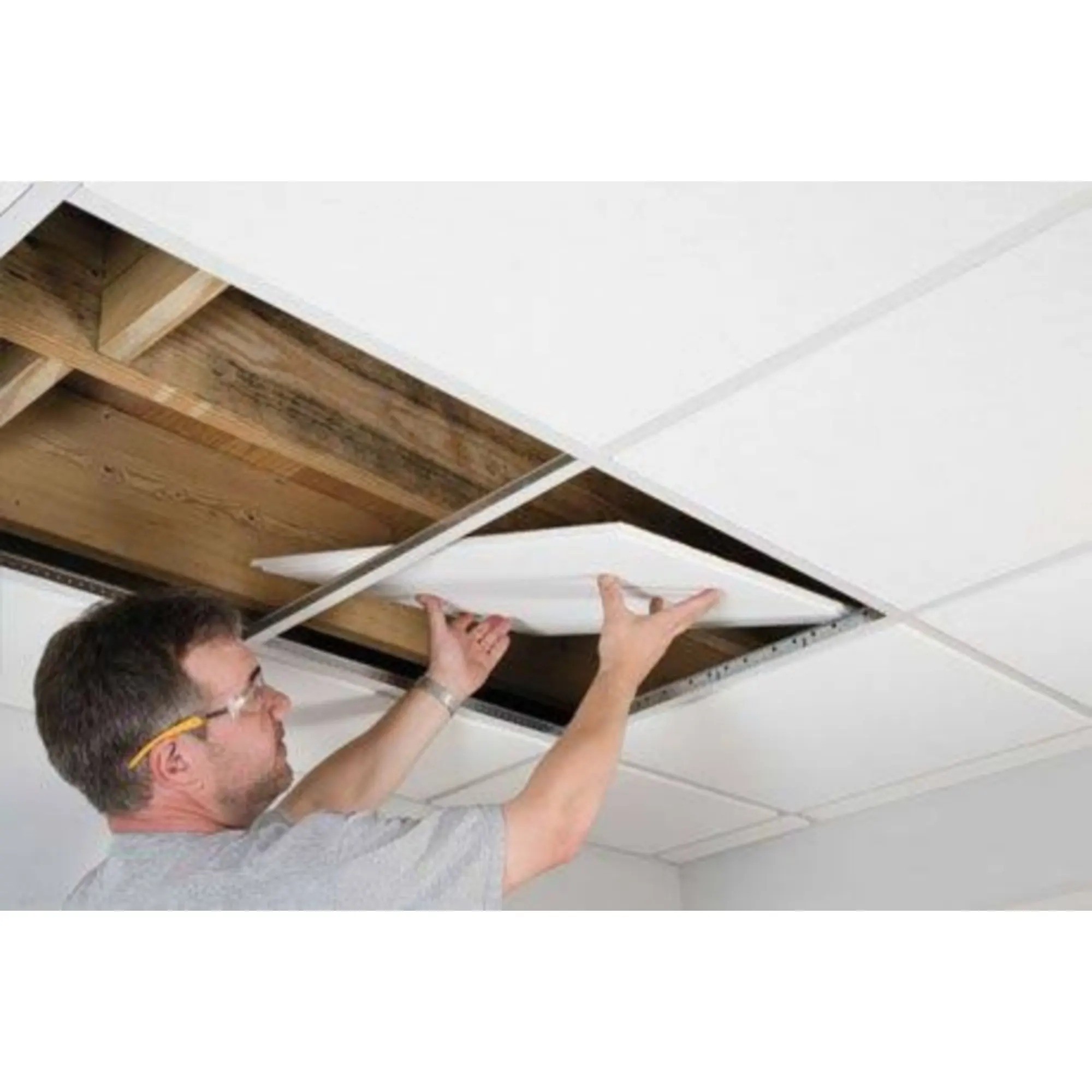
Fiberglass ceiling panels are designed to drop into a standard T-bar grid, so installation is straightforward for either a contractor or an experienced DIY team:
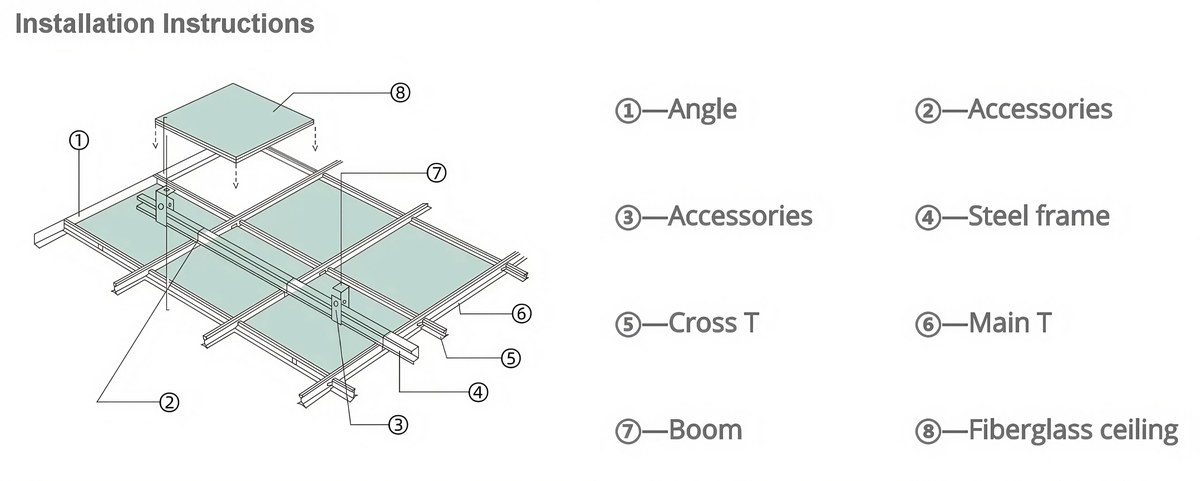
Prepare the grid. Confirm that the suspension grid is level, securely fixed to the structure, and aligned to the module you have ordered (600×600 mm is the most common).
Measure the area. Count tiles needed, and check the perimeter for cuts. Order 5–10 % extra to absorb cuts and future replacement.
Lay in the tiles. Angle each Fireglass panel up through the grid, then drop it onto the T-bar. Tegular and concealed-edge tiles follow the carrier-specific sequence.
Check level. Use a laser or long spirit level to confirm panels sit flat and joints align.
Add edge molding. Install L-molding or shadow gap trim at the perimeter for a clean reveal.
Inspect and clean. Vacuum any dust from the panel faces with a soft brush before handover.
Fiberglass ceiling panels need very little day-to-day care. Wipe gently with a dry or slightly damp soft cloth; vacuum with a soft brush attachment to remove dust. Avoid solvents and abrasive cleaners, which can mark the painted scrim. Replace individual panels rather than the whole ceiling if a tile is stained or damaged — the open grid makes single-panel swaps a 30-second job.
PuloMax Fireglass is engineered to meet Class A under ASTM E84 and A2-s1, d0 under EN 13501-1 for typical commercial interiors. Acoustic performance is engineered to NRC 0.55–0.90 depending on thickness, density, and any additional acoustic backing. Project-specific test certificates and country-of-destination compliance documents (CE, UKCA, ASTM, EN) are available on request with the order.
A fiberglass ceiling board is a lightweight acoustic panel made from fine glass fibers bonded into a uniform mat. The fiber structure absorbs sound energy, giving NRC 0.55–0.90 depending on thickness and density, while weighing roughly a quarter of an equivalent mineral fiber board.
Fiberglass reaches higher NRC at lower thickness, weighs less, and holds its shape better in humid conditions. Mineral fiber is denser and cheaper per square meter, and is often chosen for projects that prioritize cost over weight and acoustic headroom.
Standard modules are 595×595, 600×600 and 603×603 mm for square-edge lay-in systems, plus 595×1195, 600×1200 and 603×1210 mm rectangles. Custom sizes are available on request.
Yes. PuloMax Fireglass panels are engineered to meet Class A under ASTM E84 and A2-s1, d0 under EN 13501-1. Project-specific fire test reports are issued per batch.
The standard white scrim is factory-applied and designed for long service life. Custom RAL colors are available on made-to-order runs; field painting is not recommended because it changes the acoustic and fire performance of the surface.
Send your project specification, ceiling height, area in square meters, edge detail, and destination country to the PuloMax sales team. We will reply with an itemized quote covering panel, grid, acoustic package, and shipping terms within two working days.